


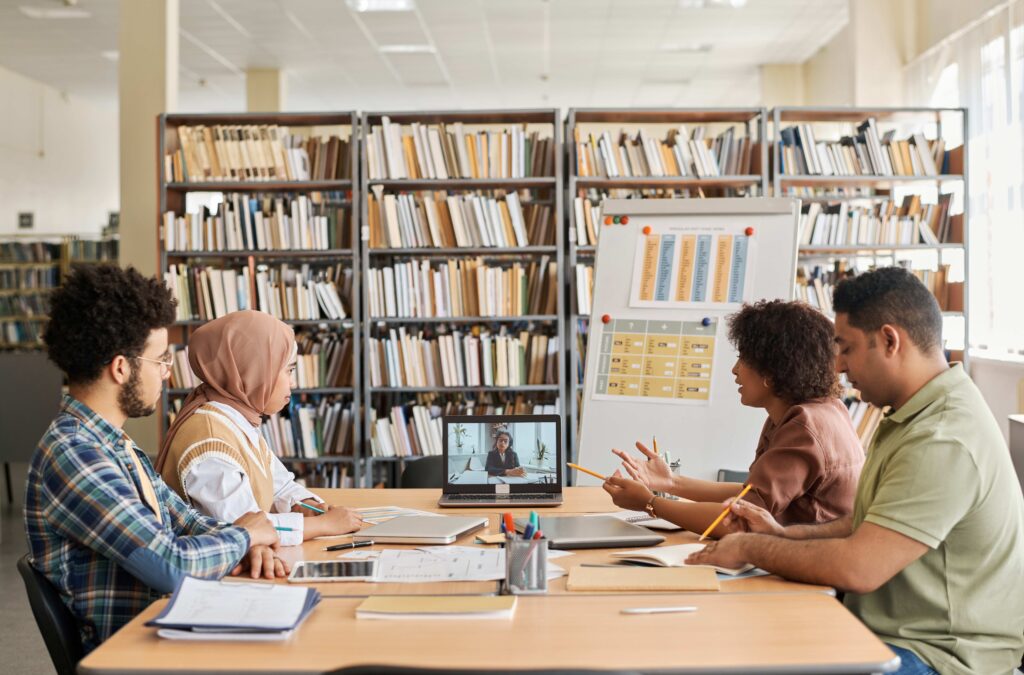
The traditional college lecture hall, long characterized by rows of forward-facing desks and a professor delivering a singular, standardized presentation, is quickly becoming a relic of the past. Colleges and universities are navigating an era marked by shifting student demographics, evolving employer demands, and rapid technological breakthroughs. To remain relevant and deliver genuine institutional value, universities are fundamentally rewriting their instructional design.
Rather than expecting students to adapt entirely to a rigid academic environment, modern instructional frameworks prioritize individualization, measurable performance, and real-world utility. This comprehensive exploration examines the leading educational frameworks actively restructuring tertiary education, analyzing how they operate, why they prove effective, and how they bridge the gap between academic theory and career readiness.
1. Competency-Based Education (CBE)
Competency-Based Education directly challenges the traditional standard of the credit hour, a metric that has governed higher education for over a century. In a traditional class setup, time is fixed, meaning students spend a specific number of weeks in a seat, while learning outcomes vary from student to student based on their final grades. Competency-Based Education flips this dynamic completely: learning outcomes are fixed, while time becomes the flexible variable.
Core Mechanics of Competency-Based Models
Under a competency-based model, academic programs are broken down into precise, measurable skills and behavioral objectives known as competencies. Students progress by demonstrating explicit mastery over these specific concepts through rigorous assessments, portfolios, or practical demonstrations.
-
Pace Control: Learners who already possess relevant industry knowledge or who grasp new subjects quickly can move rapidly through familiar topics, eliminating the need to sit through a semester-long course for material they have already mastered.
-
Targeted Remediation: If a student struggles with a specific computational concept or analytical skill, they do not fail the entire course. Instead, they pause their progression to focus exclusively on that knowledge gap until they achieve full proficiency.
-
True Skill Validation: Graded outcomes shift away from generalized percentage averages. A student cannot pass a module with a weak understanding of essential core elements; they must verify true competence in every single foundational requirement.
This approach proves exceptionally valuable for adult, non-traditional, and returning learners who must balance their ongoing professional responsibilities with academic pursuits, as it honors prior work experience and accommodates non-linear schedules.
2. Adaptive Learning Ecosystems
Adaptive learning systems utilize data analytics and advanced digital algorithms to construct an individualized educational path for every student in real time. Rather than presenting a static syllabus to an entire class, adaptive platforms constantly assess user inputs, accuracy rates, and response times to alter the delivery of instructional materials.
How Data Personalizes the Classroom Experience
When a student interacts with an adaptive software platform, the underlying system acts as an automated, highly responsive tutor. The process unfolds dynamically across several operational layers:
-
Continuous Diagnostic Assessment: The system continuously monitors student choices, tracking not just whether an answer is correct, but also the specific steps taken to reach that conclusion.
-
Early Intervention: If a system detects a foundational misunderstanding, it automatically pauses the forward progression of the course. It injects contextual baseline reviews, targeted reading segments, or practice problems to correct the specific issue before it snowballs into a major academic roadblock.
-
Optimized Difficulty Pacing: For students who demonstrate swift mastery, the platform bypasses repetitive introductory tasks, presenting advanced challenges that maintain cognitive engagement and prevent boredom.
By reducing administrative burdens and highlighting exact areas of difficulty, this approach allows university professors to move away from generic lecture delivery and focus their energy on highly targeted, high-impact interactions with the individuals who need support the most.
3. The Flipped Classroom Method
The flipped classroom framework reorders the traditional relationship between space, time, and content delivery. In a standard educational layout, valuable synchronous class time is used for passive information transmission, such as listening to a lecture, while active application, like homework assignments and problem-solving, is pushed into isolated environments outside the university walls.
Reversing the Dynamics of Homework and Lecture
The flipped framework switches these environments to maximize the collaborative power of the physical or virtual classroom space:
-
Asynchronous Preparation: Prior to stepping into the classroom, students interact independently with primary source content, instructional videos, podcasts, or digital readings at their own pace.
-
Synchronous Deep Dives: Because students arrive already familiar with the foundational facts, actual class time is entirely dedicated to active, collaborative application.
-
Instructor as Guide: Professors shift from being a lecturer on a stage to an active facilitator on the floor. They guide peer-to-peer debates, lead detailed case-study analyses, and provide immediate, constructive feedback as students work through complex problems in real time.
This model transforms the classroom from a room of passive listeners into a dynamic lab space where students build critical soft skills like teamwork, communication, and immediate, evidence-based decision-making.
4. Challenge-Based and Project-Based Learning (PBL)
As modern employers prioritize immediate, job-ready talent, higher education institutions face growing pressure to tie academic exercises directly to real-world workplace scenarios. Project-Based Learning meets this requirement by centering entire courses around answering open-ended, complex questions or solving concrete industry challenges.
Structuring Authentic Professional Experiences
Project-Based Learning goes well beyond adding a simple group presentation onto the end of a traditional syllabus. Instead, the framework dictates the trajectory of the entire learning journey:
-
Anchoring in Reality: Courses begin with a chaotic, real-world challenge, such as designing a localized environmental sustainability plan, developing a functional mobile app for a local nonprofit, or auditing an organizational supply chain.
-
Interdisciplinary Investigation: Solving these prompts requires students to pull knowledge from multiple distinct academic subjects, showing them how different fields connect in the professional world.
-
Public Defense: Rather than completing a private blue-book exam graded solely by a professor, students conclude their project by presenting and defending their findings to a panel of external industry experts, community partners, or peers.
This structural approach builds a deep level of critical thinking. Students learn that real-world problems rarely come with neat, pre-packaged answers, helping them build the exact resilience and adaptability needed to thrive in fluid corporate environments.
5. HyFlex (Hybrid-Flexible) Delivery
The HyFlex model represents the ultimate evolution of hybrid education by giving students complete control over how they attend their courses. While standard hybrid courses require specific online components mixed with fixed in-person sessions, a true HyFlex course builds an environment where every single class session is offered in three distinct formats simultaneously:
-
Face-to-Face: Traditional, physical classroom attendance with live participation.
-
Synchronous Online: Real-time remote attendance via high-definition video conferencing, featuring interactive chat rooms and digital breakout spaces.
-
Asynchronous Online: Completely self-paced engagement where students interact with recorded sessions, digital discussion boards, and structured learning modules on their own timeline.
The definitive feature of the HyFlex framework is student autonomy. A learner can choose to attend in person during one week, join remotely the following week due to work travel, and complete the module asynchronously later in the semester if personal situations require it.
By designing identical, high-quality learning outcomes across all three delivery formats, universities can radically expand access, improve retention rates among working adults, and maximize the utility of their campus infrastructure.
Frequently Asked Questions
What specific evidence proves that modern learning models improve student performance over traditional lectures?
Comparative educational research consistently shows that active learning frameworks yield higher retention rates and significantly lower failure metrics than passive lecture systems. For example, comprehensive data tracking students using adaptive learning platforms often reveals substantial increases in exam performance, alongside a major reduction in overall course drop rates. This measurable improvement occurs because these modern models address personal knowledge gaps as they happen, preventing temporary confusion from turning into a permanent academic failure.
Do competency-based education models change how employers evaluate a graduate resume?
Yes, competency-based credentials offer employers a much more transparent view of a graduate’s actual capabilities. Instead of a traditional transcript filled with abstract letter grades in broad course titles, competency-based portfolios detail the exact technical abilities, software regularities, and behavioral milestones a student has verified. This clear skill mapping aligns directly with modern, skills-based corporate hiring strategies, giving employers confidence that an applicant can execute job requirements from day one.
How do universities prevent cheating and ensure academic integrity in fully asynchronous or adaptive environments?
Institutions secure decentralized digital learning through multi-layered validation strategies. This includes using AI-informed identity verification tools, multi-factor login steps, and secure browser locking systems during remote evaluations. More importantly, assessment design is shifting away from simple, easily compromised multiple-choice tests. Modern courses emphasize authentic, individualized assessments, such as live video presentations, interactive oral examinations, and customized project portfolios that are incredibly difficult to replicate or automate.
Does implementing a flipped classroom model increase the workload for university professors?
The workload for a flipped classroom shifts structurally rather than simply increasing overall. The development phase requires significant upfront effort, as faculty members must record clean instructional media, curate digital resources, and design interactive classroom activities. However, once a course launched, the time traditionally spent delivering repetitive lectures is redirected into active student coaching and small-group feedback. This makes the day-to-day teaching process highly interactive, rewarding, and focused on student support.
Can hands-on fields like healthcare and engineering utilize digital adaptive learning models effectively?
Adaptive digital models serve as an exceptional preparatory baseline for hands-on, highly technical fields. Students utilize interactive digital simulations, virtual reality modules, and adaptive software to master essential theoretical concepts, anatomical facts, and safety protocols independently. By completing this baseline training digitally, students maximize the value of their limited physical lab and clinical hours, arriving fully prepared to focus on advanced manual skills and real-world procedures.
How does the HyFlex model maintain equal community engagement for asynchronous students?
To keep asynchronous learners fully connected, faculty members design deliberate, parallel digital spaces. This involves using interactive discussion boards where students must respond to prompts using video or audio tools, collaborative group tasks with flexible deadlines, and shared digital workspaces like cloud-based project boards. Furthermore, instructors track engagement metrics within the learning management system to ensure asynchronous students receive identical feedback, coaching, and peer connection as those sitting in the physical room.
What are the main cultural barriers preventing universities from adopting these frameworks quickly?
The primary barriers stem from deeply rooted institutional traditions and outdated funding structures built entirely around the credit-hour model. Faculty promotion systems often prioritize research output over innovative teaching design, which can leave professors with little incentive to redesign their courses. Additionally, transitioning away from traditional lectures requires a major shift in mindset for both administrators and students, who must adjust to an environment where learners are expected to be active drivers of their education rather than passive consumers.